

Mud Season
A Reflection on Readiness + Movement Beneath

There is a particular kind of restraint
asked of us in early spring.
All at once, the light shifts. You can feel it.
Snow pulls back from the fence rows.
The air loosens.
Something inside you stretches toward it.
And still, as a gardener, you do not plant.
Soil that is too wet
will rot a seed.
*
Earlier this week, I walked out to the beds.
The earth was dark.
Last year’s tomato stalks lay flattened, pale and brittle.
My boots sank slightly into the mud.
The top gave way easily.
Underneath, it was slick, heavy and cold.
Mud season asks for our patience.
Patience that doesn’t grip.
It is a season of waiting.
This waiting is not empty.
It notices the difference between warmth in the air
and warmth that has reached the roots.
Between a bright afternoon
and soil that can hold what you press into it.
There is a tension here.
The almost.
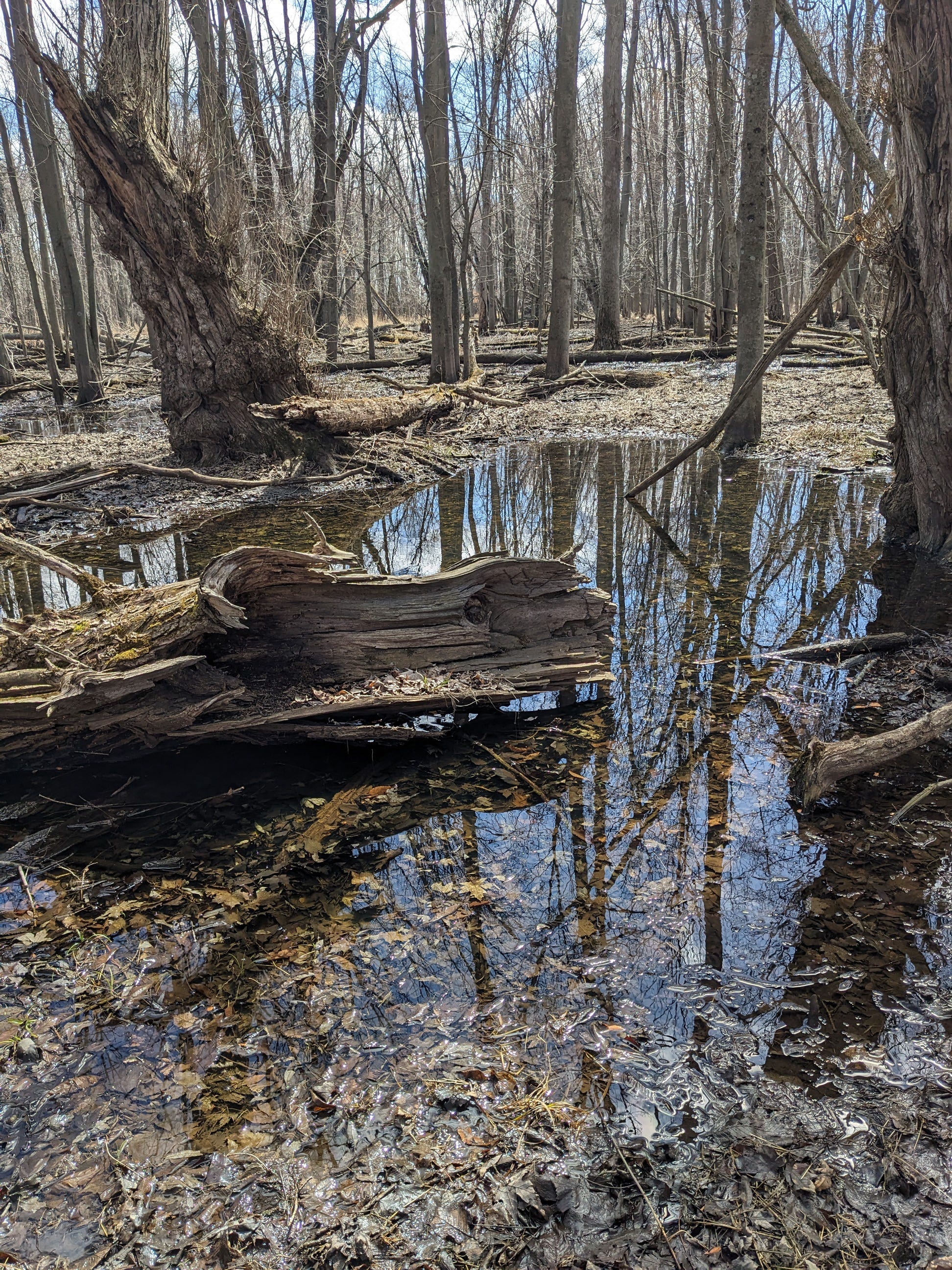
The days that feel like an invitation
but are not yet ready.
Because under the surface, something is happening.
Thaw, saturation, draining, and air finding its way back between the particles.
From a distance, nothing looks impressive.
It looks like gray beds, bare branches.
And yet the structure is forming if we have the eyes to see it.
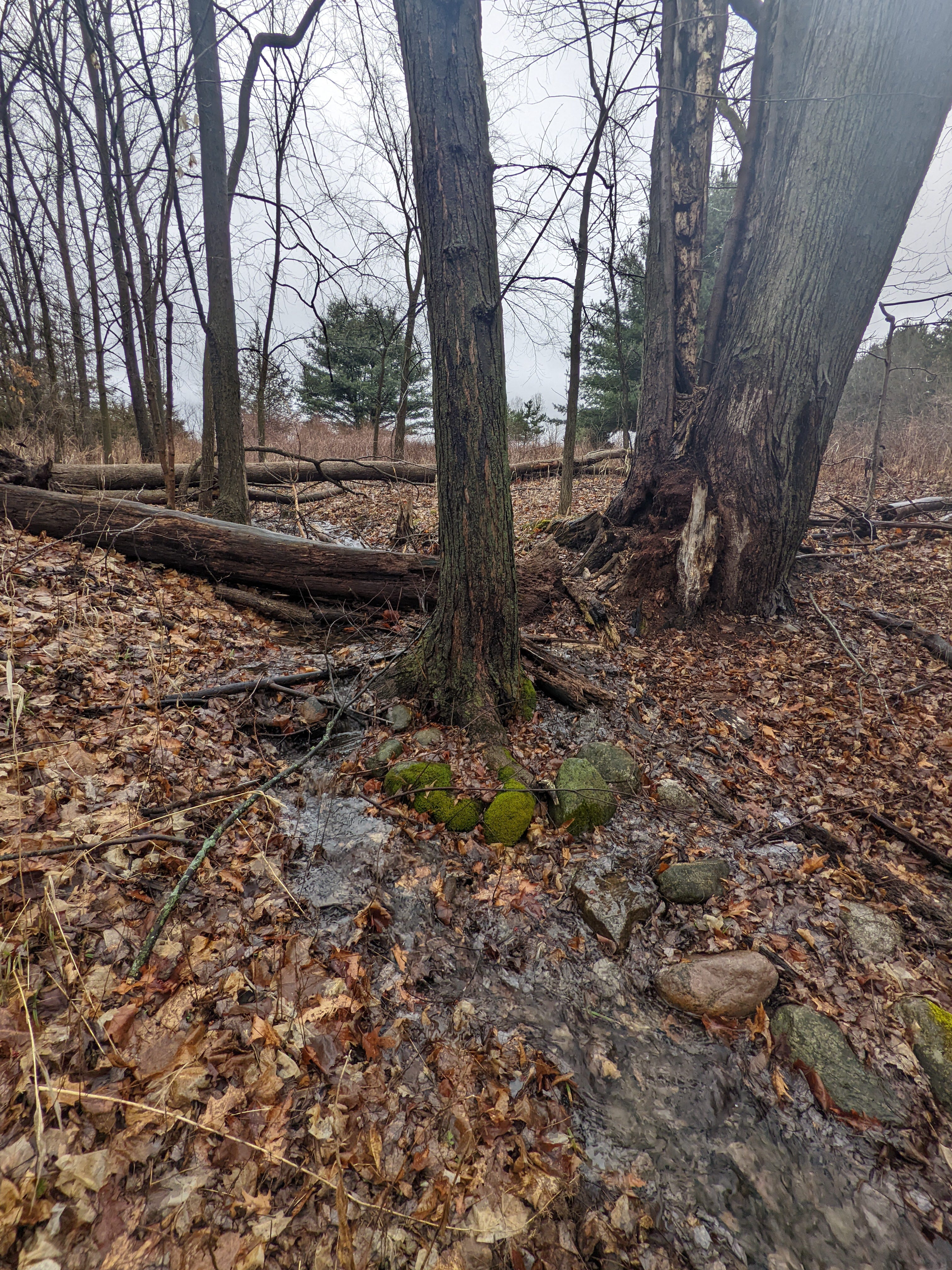
Plant too early and you disturb what is loosening.
Work it too soon,
and you compact the soil.
The earth knows sequence.
It does not hurry.
It does not mistake brightness for readiness.
Mud season is not beautiful in the way we usually think of beauty.
It is brown and soft
and perhaps unremarkable.
Boots dirty.
Hands empty.
And still
something is being made ready.
You can feel it
if you stand there long enough.
If you let your weight settle
without trying to change anything.
If you allow
the almost
to be enough.
P.S. From Alix Klingenberg. (Emphasis mine)
“My voice now comes
like spring, a pushing
through the frozen earth, breaking
slow and laborious.
Do I push or wait?
Is this a matter of work or prayer?”
You have a wonderful essay here, Rhonda, a poetic essay that doesn't try too hard but finds its own quiet tone and truth. You could, if you want, revise this into a poem, easing out most of the essay parts . . . . I think many people should read this or some version of this. Thank you.